(786) 321-8089 Call for a Free Estimate Free Estimate

How Much Does Parking Lot Paving Cost in Miami in 2026?

Published September 17, 2026 by Miami Parking Lot Paving

Every property owner asks for a number and every honest contractor starts with a range, because a parking lot is priced from what is under it, not from its square footage alone. This guide gives the ballpark, explains what moves it, and shows how to compare three estimates so the cheapest bid is not simply the one that left the most out.

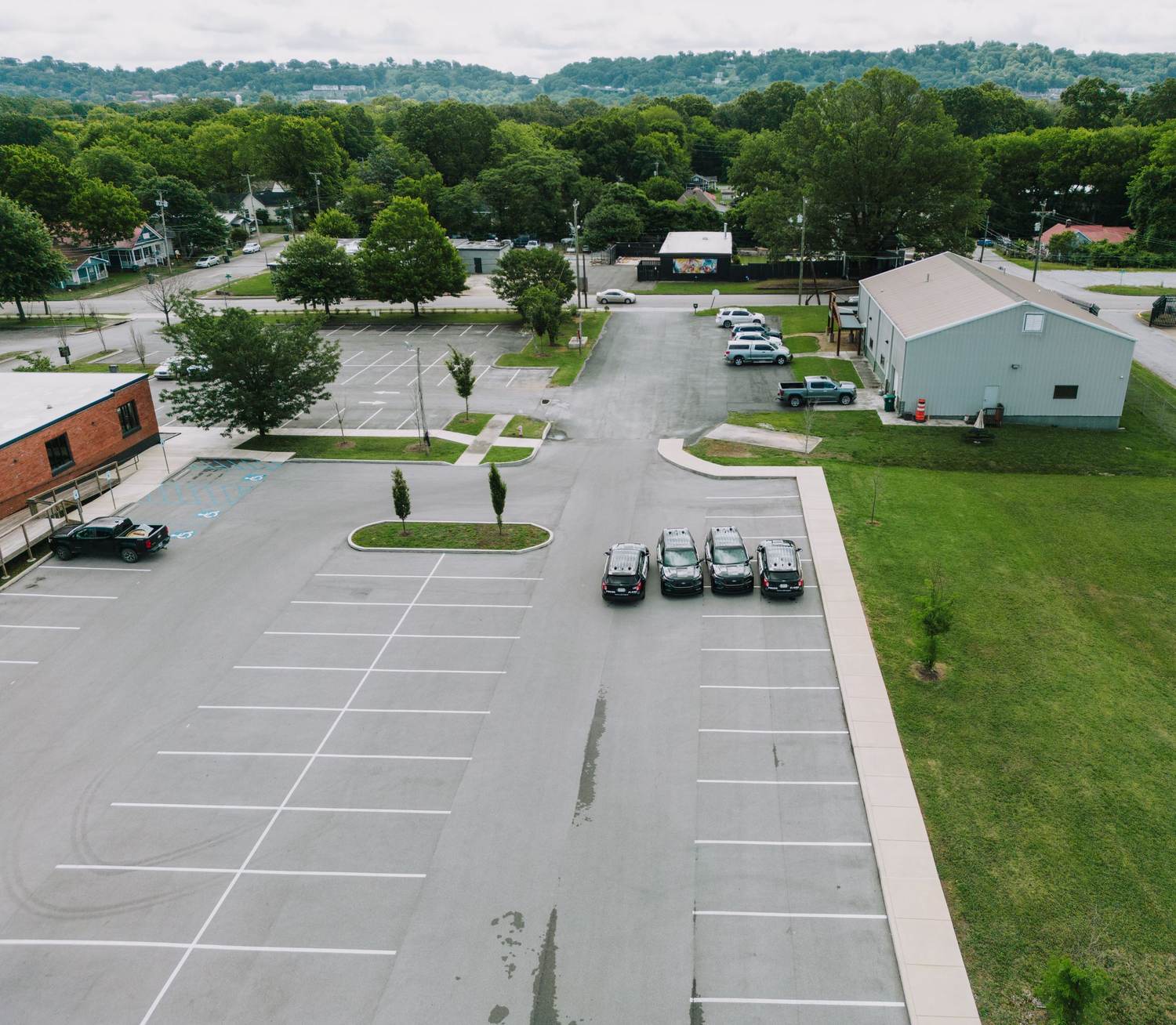
Drone view of a freshly striped commercial parking lot beside a low commercial building

📞 Call (786) 321-8089 Request a Free Estimate

The Short Answer

As a ballpark, full new commercial asphalt construction in the Miami area runs roughly $2.50 to $7.00 per square foot. Overlays and repairs usually cost less per square foot than full new construction.

Treat that as a ballpark, not a quote. The spread between the low end and the high end is nearly three times, and the difference is not margin: it is the depth of the base, the drainage that has to be built, the thickness the traffic demands and the hours the work is allowed to run. Two lots of identical size on the same street can land at opposite ends of that range for reasons you cannot see from the surface.

For every other service on a commercial property, from sealcoating to striping to concrete, the honest answer is that it is priced from the site. That is not evasion. A sealcoat on a raveled, porous surface absorbs more material than one on a tight surface, and a striping job that redesigns a layout is different work from repainting the lines that are already there.

What Drives the Price

Five questions account for most of the difference between a low number and a high one on the same lot. Ask them of your own property before you read a single bid.

1. Is the base sound, and how do you know?

This is the single biggest variable. A lot with a sound base can be milled and overlaid. A lot whose base has failed has to be excavated, rebuilt with compacted limerock and repaved from the bottom up, which can multiply the cost of the same square footage. Alligator cracking, ruts in the truck lanes and patches that keep failing are the visible signs, and a core sample settles it when they are ambiguous.

2. Where does the water go?

On South Florida's flat ground, drainage is built, not found. Catch basins, trench drains at docks, curb and gutter runs and the grading that feeds them are each real cost, and they are the items that decide whether the pavement lasts a long time or gets soft from below. A bid with no drainage line on a lot that ponds water has not solved the problem it was called for.

3. How heavy is the traffic, and where?

Customer stalls and truck lanes do not need the same section. A warehouse yard where loaded trailers back into docks needs a thicker asphalt section over a thicker base in those zones, and concrete where trailers park and lift. A bid that quotes one thickness for an entire industrial yard has not looked at how the property is used.

4. When is the work allowed to happen?

A lot that can close for a week is cheaper to pave than a plaza that has to stay open and be phased into four sections with night work. That is not a surcharge, it is more mobilizations, more traffic control and more short shifts. It is also usually worth paying, because the alternative is closing the property.

5. What else has to be touched?

Curbs that have broken, a dumpster pad that keeps failing, catch basin frames that need resetting to the new grade, a sidewalk panel on the accessible route, accessible spaces that were never right. These ride along with the paving at a fraction of what they cost as separate visits, and leaving them out is how a bid gets cheap.
New Construction vs Overlay vs Repair

The three levels of work differ enough in cost that picking the right one matters more than negotiating the price of the wrong one. In descending order of cost per square foot:

ApproachWhat you are paying forWhen it is the right spend
New construction or full replacementDemolition, excavation, new compacted base, full asphalt section, drainage structures, curbs and a new layout.The base has failed across large areas, or the lot is new, being expanded, or being converted to heavier traffic.
Mill and overlayMilling the worn layer, full-depth patches in the failed spots, structure adjustments, a new surface course and restriping.The surface is worn but the lot drains and does not move under a loaded truck.
Repair and maintainFull-depth patches, crack sealing, drainage corrections, sealcoating and restriping.Damage is isolated, the rest of the lot is sound, and the goal is to push the bigger jobs out by years.

The arithmetic that matters over a decade is that each level pushes the next one further out. A lot kept on crack sealing and sealcoating reaches its overlay later, and a lot that gets its overlay while the base is still sound may never need a full rebuild. Deferring the cheap years is what makes the expensive ones arrive early.

For the decision between the top two levels, the overlay versus replacement guide walks through the base test in detail.

Hidden Costs: Drainage, Permits and Night Work

These four items are legitimate costs that quietly separate a complete bid from a cheap one. Check each estimate for them by name.

Two more that are easy to miss: restriping after the asphalt, including the accessible spaces and signs, and a weather buffer. Summer storms will move a phase, and a schedule with no slack in it is a schedule that will slip without a plan.

How to Compare Estimates

Three bids on the same lot are only comparable if they describe the same work. Line them up and check these seven things before you look at the totals.

  1. Asphalt and base thickness, by zone. One number for the whole lot is a warning sign on any property with truck traffic.
  2. Which areas get full-depth repair. The bids should agree on where the base has failed. If one says none and another says a third of the lot, one of them has not looked.
  3. Milling, and to what depth. Skipping it on a lot with curbs raises the finished height against them, which shortens the curb face and leaves water sitting at the perimeter.
  4. The drainage scope. Basins, inlets, gutter runs and grade work, named and counted.
  5. Removal and disposal. Included or not.
  6. Striping, signs and accessible spaces. When a bid ends at the asphalt, the layout becomes somebody else's job, which means another contractor and another mobilization on your invoice.
  7. The phasing plan and work hours. A written sequence, which phases run at night, and what stays open in each one.

When one bid is far below the others, the question to ask is not why it is cheap but which of those seven it left out. Ask each contractor to price the same scope and the numbers usually converge. If you want to spread the work over budget years, ask for the scope separated by area so you can approve part of it now, which is how most multi-year pavement budgets are built under a maintenance plan.

One more check that costs nothing: run your lot through the free ADA parking calculator before you sign. If the accessible space count is short, correcting it during the restriping that follows the paving costs a fraction of doing it as its own visit later.

Get a Free Site Estimate

A ballpark is where the conversation starts. A site walk is where it gets a number: we look at the surface, the base where it shows, where the water goes, the curbs, the striping and the accessible spaces, and the written scope separates repair, resurfacing and replacement by area with the cost drivers named.

Call (786) 321-8089 or send the details below. Estimates are free and there is no obligation.

Related services: Asphalt Paving, Asphalt Resurfacing. Guide: Overlay vs replacement. Questions on your lot? Use the contact page.

📞 Call (786) 321-8089

📞 Call (786) 321-8089 for a Free Estimate