(786) 321-8089 Call for a Free Estimate Free Estimate

Parking Lot Striping and Pavement Markings in Miami

Striping is the part of a parking lot that everyone sees and that most owners repaint last. Faded stalls cause double parking and dents, a missing fire lane invites a citation, and an accessible space without the right aisle, sign and slope is a compliance problem before anyone even parks in it. Miami Parking Lot Paving stripes and restripes commercial lots across Miami-Dade, Broward and Palm Beach counties, with night work available for lots that cannot close by day.

This page covers the difference between a new layout and a restripe, every marking a commercial lot needs, how to plan a layout that gets the most out of your space, an honest comparison of paint types, the hardware that goes with the lines, and the sequence when striping follows sealcoating.
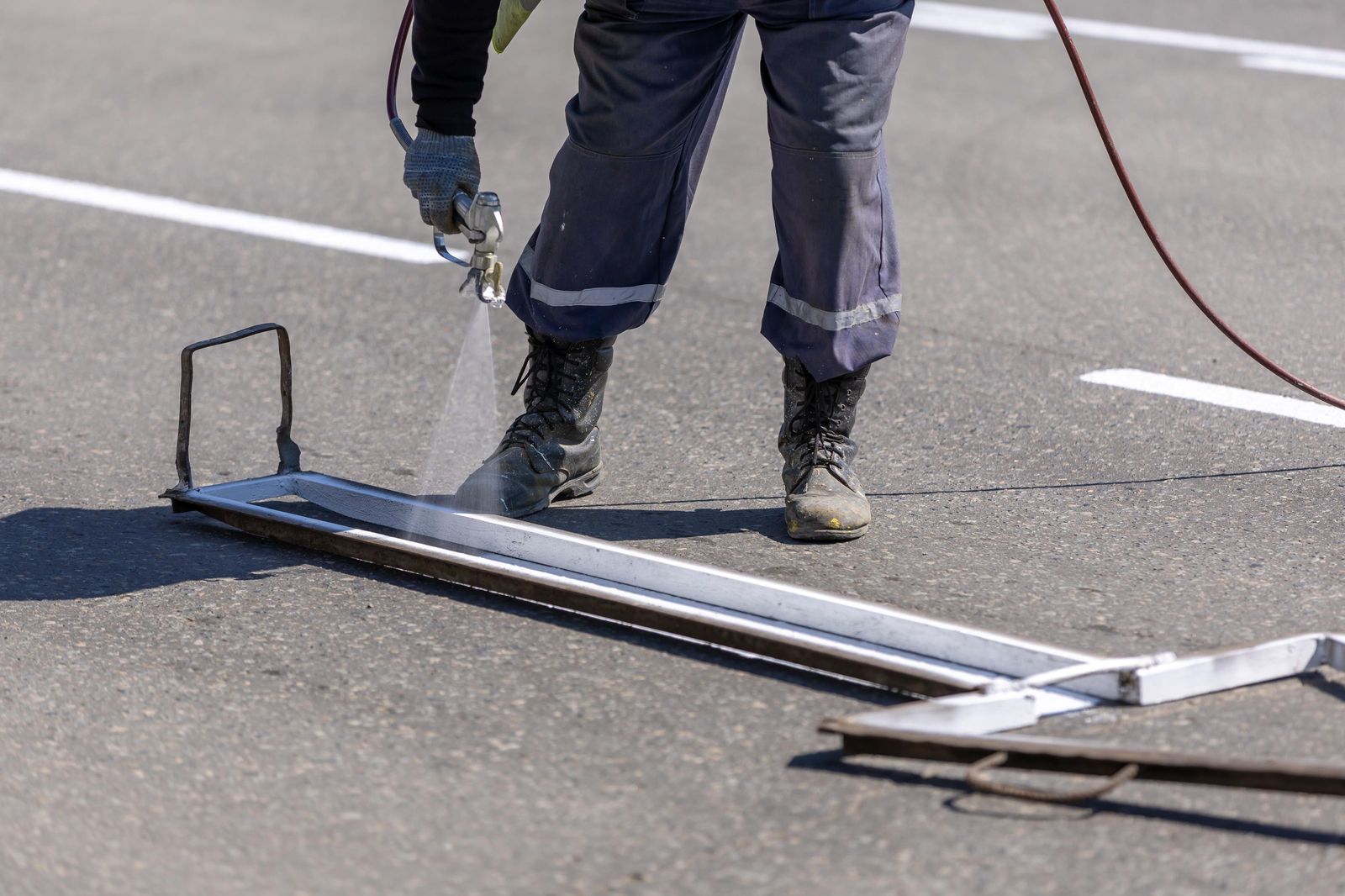
Striping worker spraying a fresh white line along a straightedge guide

📞 Call (786) 321-8089 Request a Free Estimate

New Layout vs Restriping

Restriping repaints the layout that is already on the lot. A new layout starts from measurements and redesigns the stalls, aisles and markings, usually because the old layout wastes space, no longer matches how the property is used, or never had the right accessible spaces. Restriping is faster and cheaper; a new layout is the right call more often than owners expect.

Restripe the existing layout when

Design a new layout when

A layout review is part of every striping estimate. If the existing layout is sound, the estimate says so and prices a restripe. If it is not, you get a drawing of the proposed layout with the stall count before anything is painted.

📞 Call (786) 321-8089 for a Free Site Estimate

Markings We Handle

A commercial lot needs more than stall lines. These are the markings we lay out and paint, with the point of each one.

Layout Planning to Make the Most of Your Spaces

The stall count on a lot is set by geometry, and the geometry is often wrong. A layout that uses the right stall size, the right angle for the aisle width and the right aisle direction routinely recovers spaces that the old layout wasted, without adding a square foot of pavement.

The layout review measures the lot, drafts the proposed stall plan with the count, and marks the accessible spaces, fire lanes and loading zones on it. You approve the drawing before paint goes down, which is also the moment to catch a numbering scheme or a reserved-stall plan for an HOA or office tenant.

Paint Types and Durability

The honest version: on most South Florida lots, water-based traffic paint is the right choice for stalls and arrows, and it will need refreshing every 1 to 3 years depending on traffic and sun. Thermoplastic lasts several times longer and costs several times more per foot, which makes sense for crosswalks, stop bars, fire lanes and other high-wear markings, and rarely pays off on stall lines that get repainted at every sealcoat anyway.

Marking materialWhere it fitsTypical service lifeTrade-offs
Water-based acrylic traffic paintStalls, arrows, stencils, most lot markingsCommonly 1 to 3 years on a busy lot in full sunLowest cost, fast to apply, repainted at each sealcoat; fades fastest in South Florida sun
Solvent-based or alkyd paintSome restripe jobs and older lotsSimilar to water-based, sometimes a little longerStronger odor, longer dry time, more restrictions on use
High-build or epoxy-modified paintHigh-traffic aisles, entrances, warehouse floorsLonger than standard paintHigher cost per foot; surface must be clean and fully cured
Preformed and hot-applied thermoplasticCrosswalks, stop bars, fire lanes, arrows on roads and main drivesSeveral times the life of paintHighest cost, needs a sound surface, hard to remove; not used for stall lines that change with each sealcoat

Two things shorten any marking's life here: sun and abrasion. Lines in full sun on a lot with heavy turnover fade first, and lines at entrances and in truck lanes wear first. On a maintenance plan the whole lot is restriped at each sealcoat and the high-wear markings get a touch-up in between.

Wheel Stops, Speed Bumps and Signage

The hardware that goes with the lines does as much for safety and compliance as the paint. It is installed in the same visit as the striping so nothing is anchored into a line that is about to move.

Florida rules for accessible spaces and signs

Florida sets requirements beyond the federal minimum, and they are the ones a striping job has to get right. Under Florida Statutes section 553.5041:

This is general information, not legal advice. Requirements can vary by property and project. Confirm with your contractor, a certified accessibility professional, or your local building department.

Restriping After Sealcoating

Sealcoating covers every line on the lot, so restriping follows it every time. The sequence is repairs, then sealcoat, then a full cure, then paint. Striping over sealcoat that has not cured bleeds into the coat and peels within weeks, which is why the two are scheduled as one project with the cure window built in rather than as two contractors on two dates.

The sealcoating page covers the coat itself and the scheduling around afternoon storms.

Striping Cost Factors

Striping is priced by the linear foot of line plus each stencil, marking and piece of hardware, and the estimate lists them so you can see the count. These are the items that move it.

Questions to ask before you hire

Striping FAQ

Get a Free Striping Estimate

Tell us the approximate number of stalls, whether the lot was recently sealed, and whether you want the existing layout repainted or a new one designed. The layout review measures the lot, checks the accessible spaces and fire lane, and the estimate lists every line, stencil and piece of hardware with night work priced if your lot cannot close by day.

Related services: Sealcoating, ADA Compliance. Service areas: Miami-Dade County, Doral. Guide: ADA parking lot requirements in Florida.

📞 Call (786) 321-8089

📞 Call (786) 321-8089 for a Free Estimate